The Superpowers of Soil
Is dirt just dusty? Meet Dusty the Dirt and Dusty's superhero friends, Wanda the Worm and the Micro-Munchers! Discover how healthy soil acts as a 'carbon sponge' to cool the Earth in this fun, illustrated guide for kids and parents.
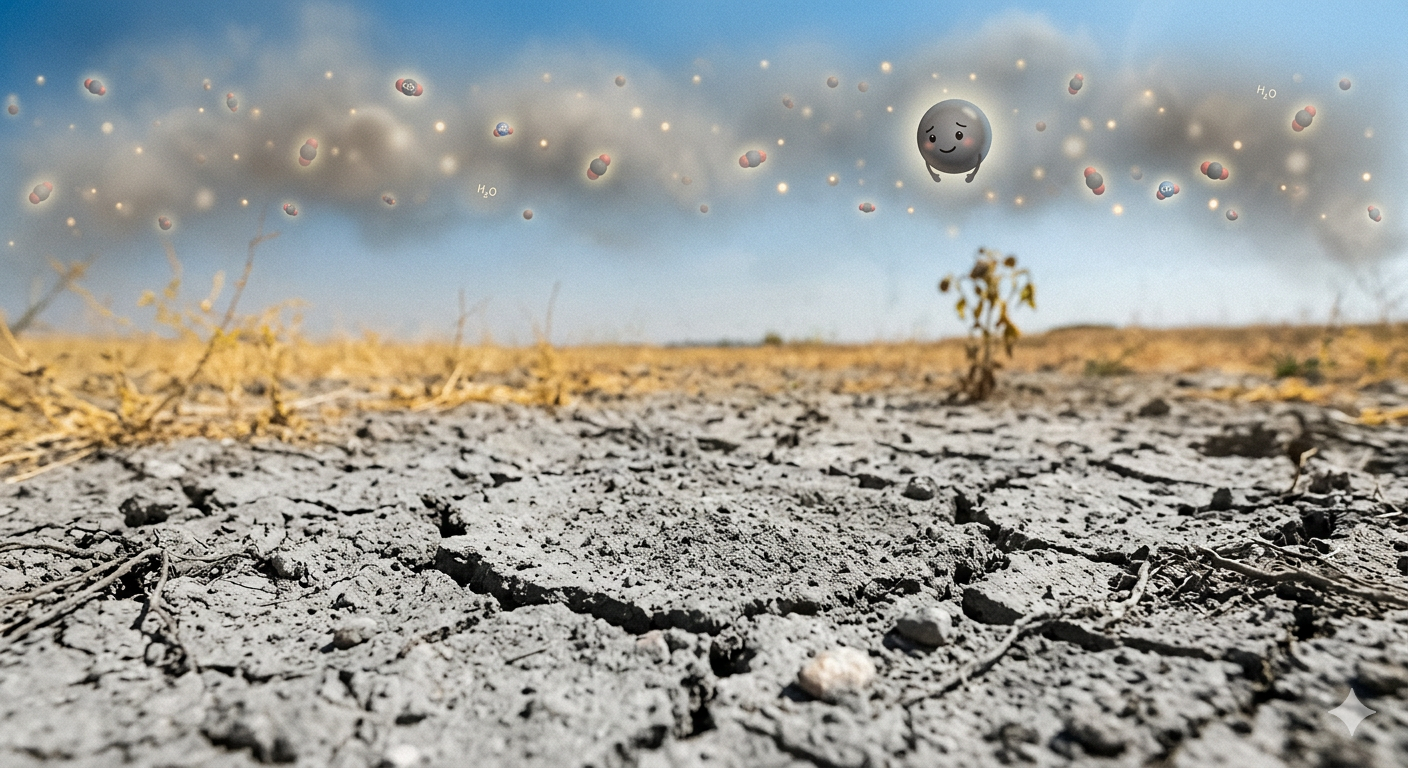
Dusty was a quiet patch of land, dry and crumbly and feeling very alone. When the wind blew, Dusty scattered into little gray puffs. Without roots to hold Dusty together, every breeze carried a tiny piece away. “I wish I had a job,” Dusty sighed. “Something important. Something that helps.” But for now, Dusty was just… dirt.
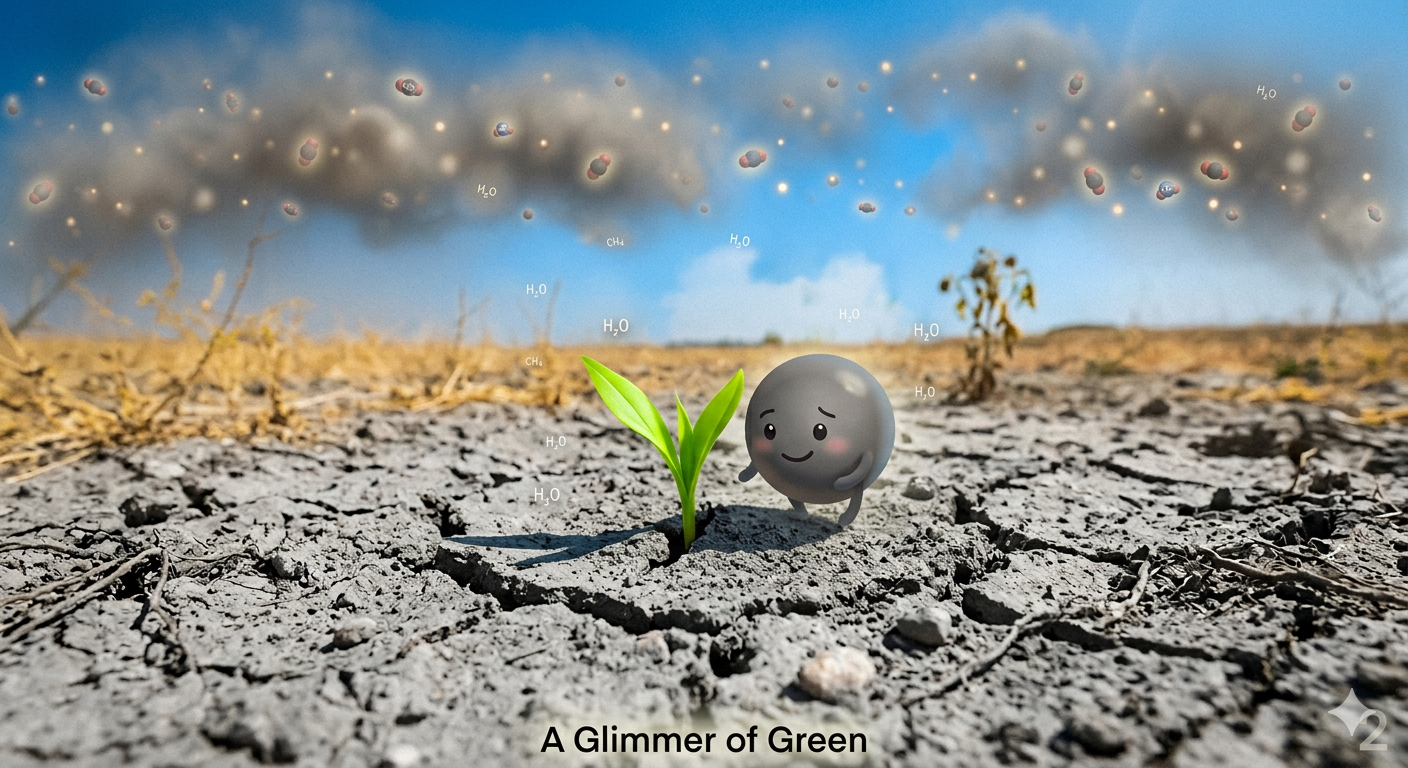
High in the sky, Cee‑Cee the Carbon Atom zipped through the warm, crowded air. Cee‑Cee was part of a big, heavy blanket wrapped around the Earth, making everything feel a bit too toasty. “Whew,” Cee‑Cee puffed. “It’s busy up here. I wish I could find a cool, quiet place to rest.” Looking down, Cee‑Cee spotted Dusty far below — small, still, and waiting for something to change.
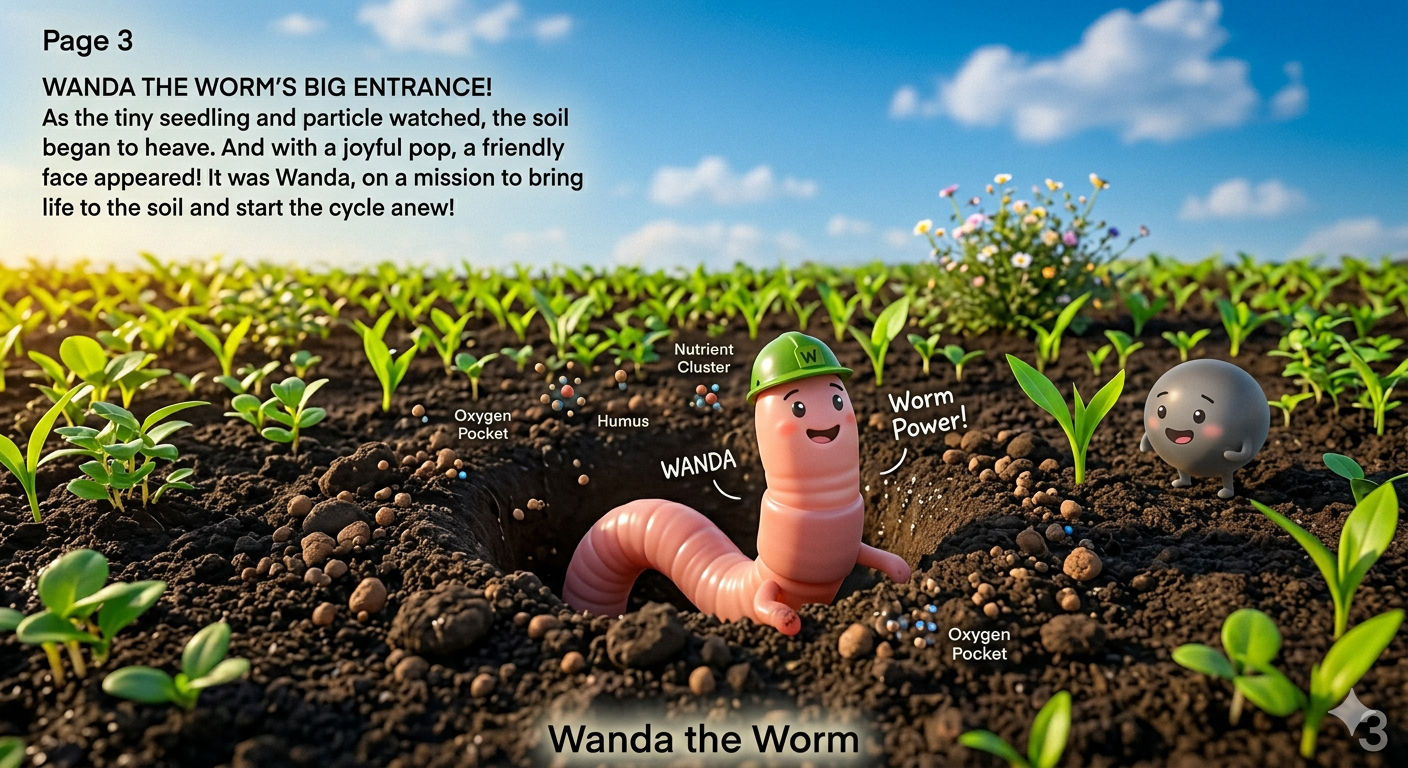
With a joyful pop, Wanda the Worm burst through the soil. “You’re not just dirt,” Wanda said. “You’re a sleeping giant! And I’m here to help you wake up.” Dusty felt a spark of hope for the first time in a long while. Soon, Dusty would become rich in humus and full of tiny oxygen pockets.
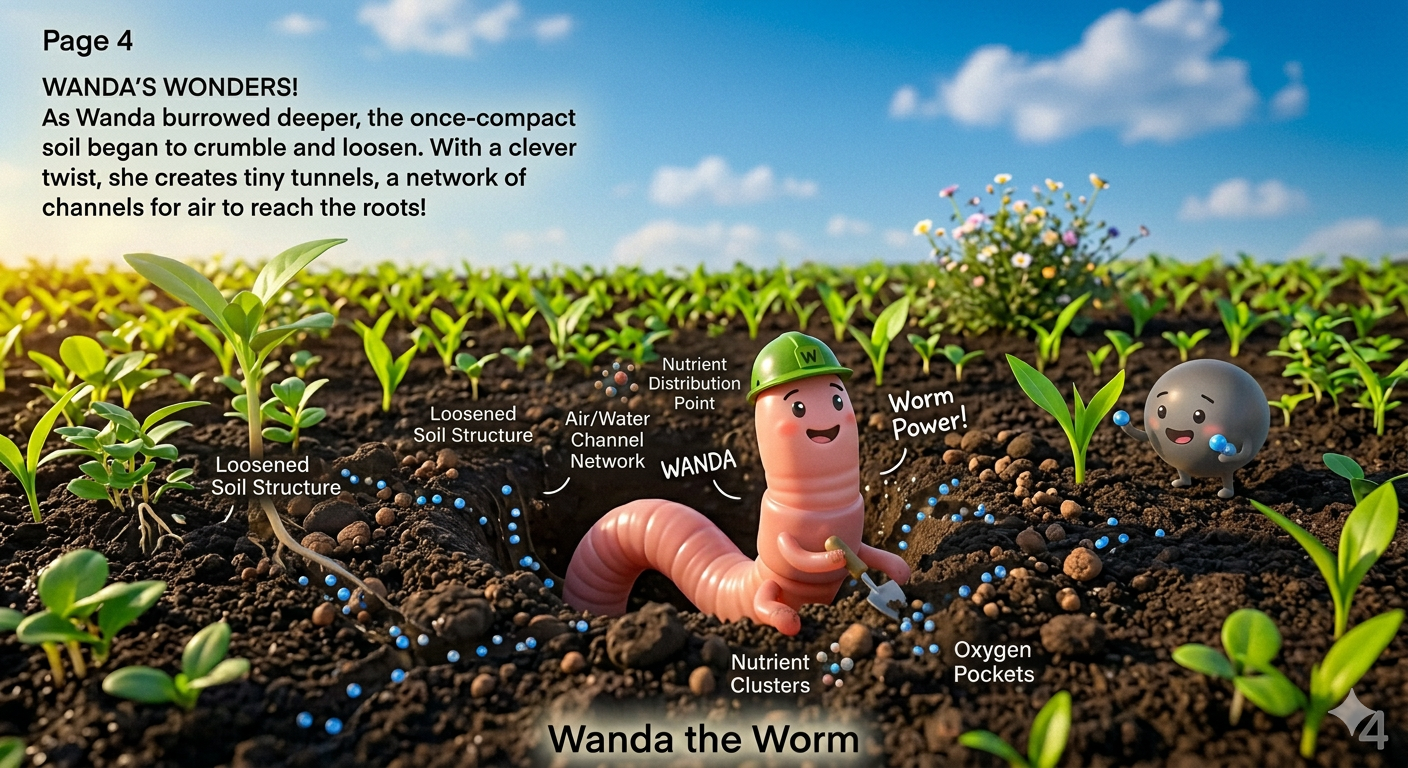
Wanda wriggled and twisted, making tiny tunnels everywhere Wanda went. “These tunnels help you breathe,” Wanda explained. “Air and water can finally reach your roots!” New roots stretched down like long straws, drinking water and holding Dusty in place. Dusty felt lighter… looser… alive — full of growing porosity and tiny nutrient clusters.
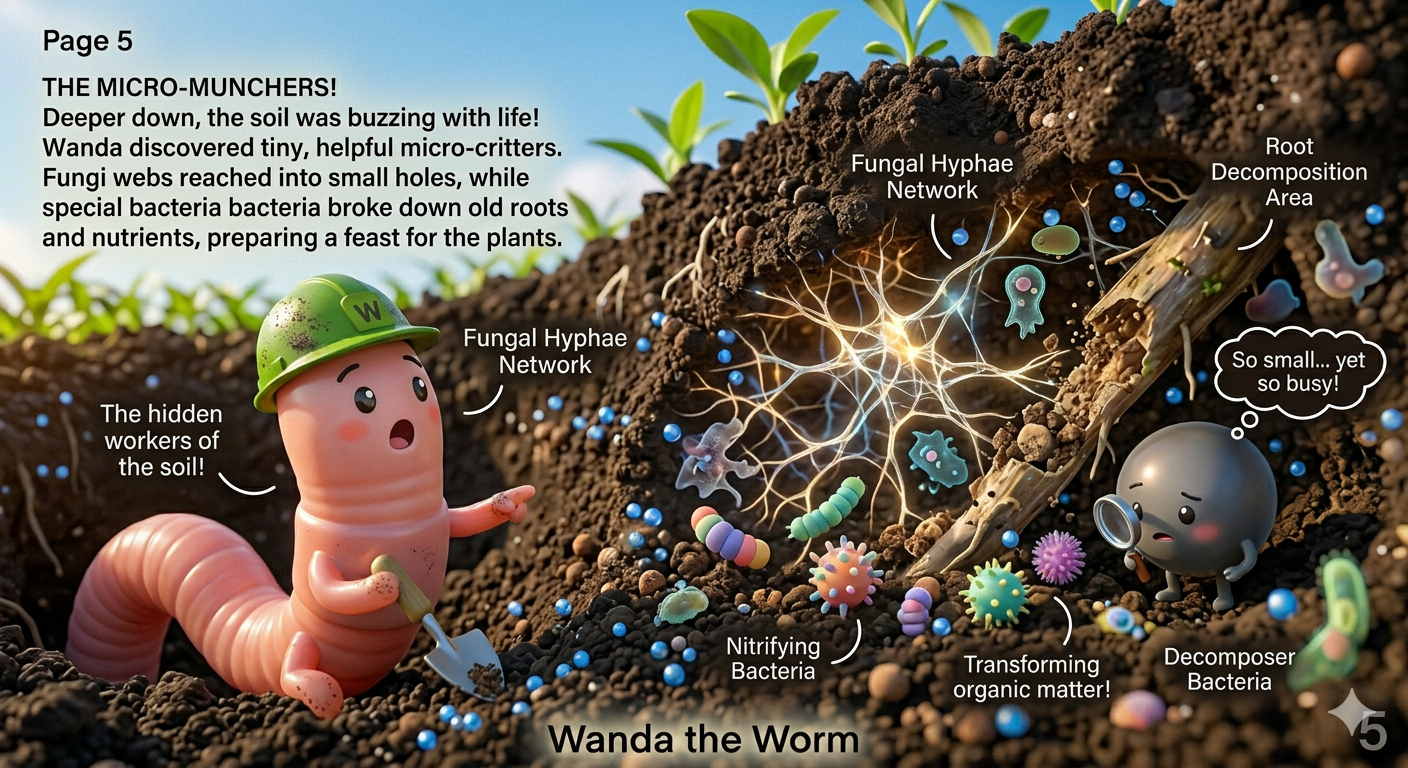
Deeper down, Dusty met the tiniest helpers of all — the Micro‑Munchers! They were too small to see, but wow, were they busy. They turned old roots into plant snacks and filled Dusty with new energy. “Keep going,” they cheered. “You’re waking up!”
Fungi, hyphae, and bacteria all worked together underground.
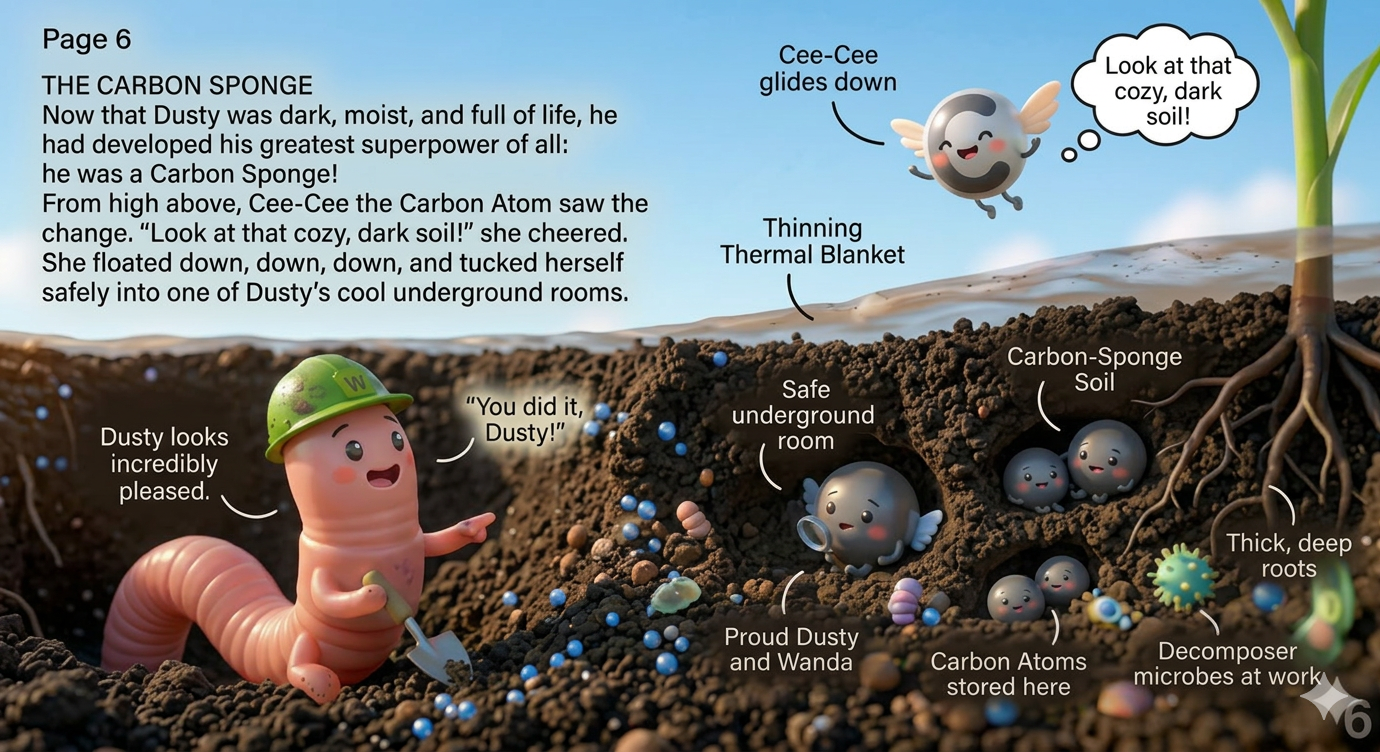
With Wanda’s tunnels and the Micro‑Munchers’ hard work, Dusty changed. Dusty became dark, soft, and full of life — a real carbon sponge! The deep roots helped tuck carbon atoms safely underground. Unlike carbon high in the sky that traps heat like a blanket, carbon stored in the soil helps keep the ground cool. High above, Cee‑Cee spotted the change. “That soil looks cozy!” Cee‑Cee cheered, floating down to rest in one of Dusty’s cool underground rooms. Dusty glowed with pride. At last, Dusty had an important job.
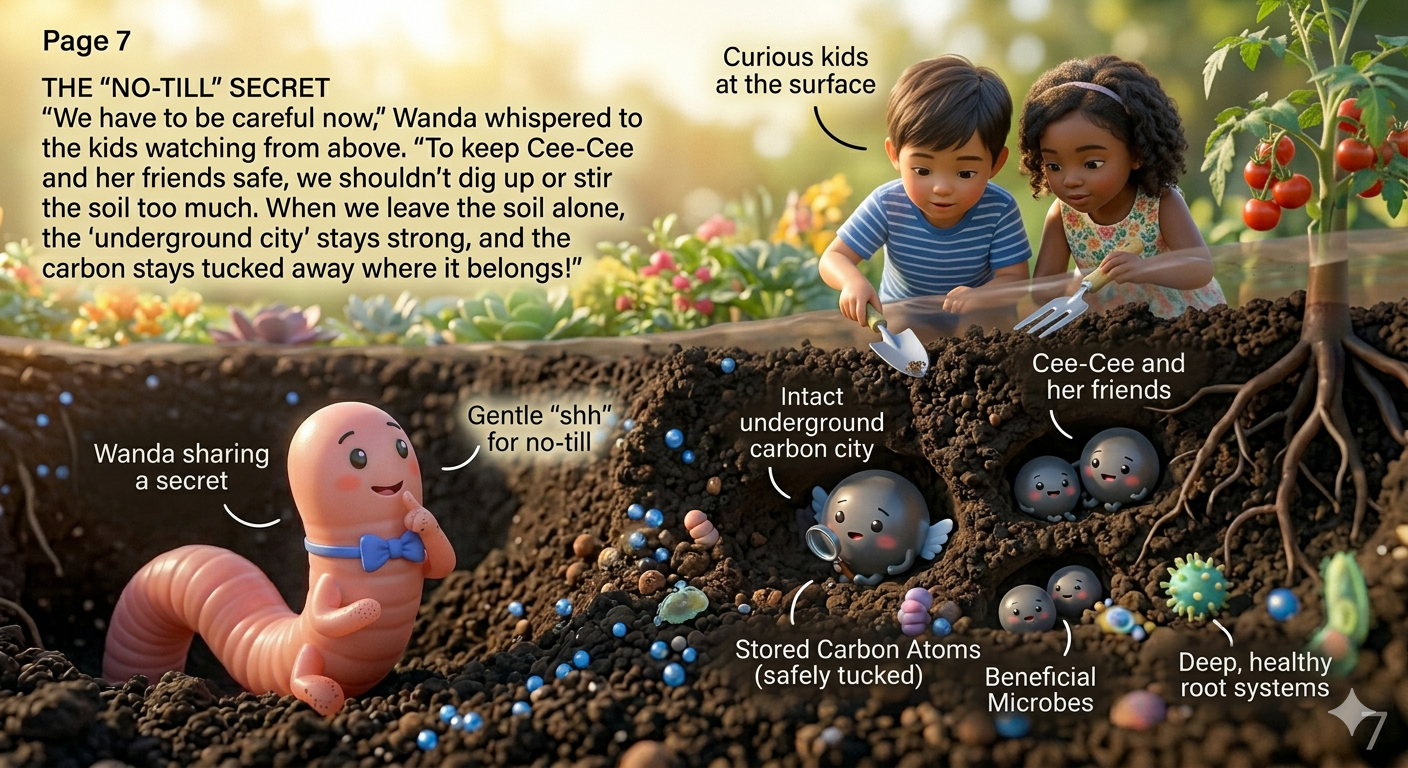
“Now that you’re strong,” Wanda whispered, “we have to protect your underground city.” Wanda told the kids above, “If we don’t dig too much, Dusty can keep Cee‑Cee and the other carbon atoms safe. When we leave the soil alone, the whole world stays cooler.” This is called no‑till.
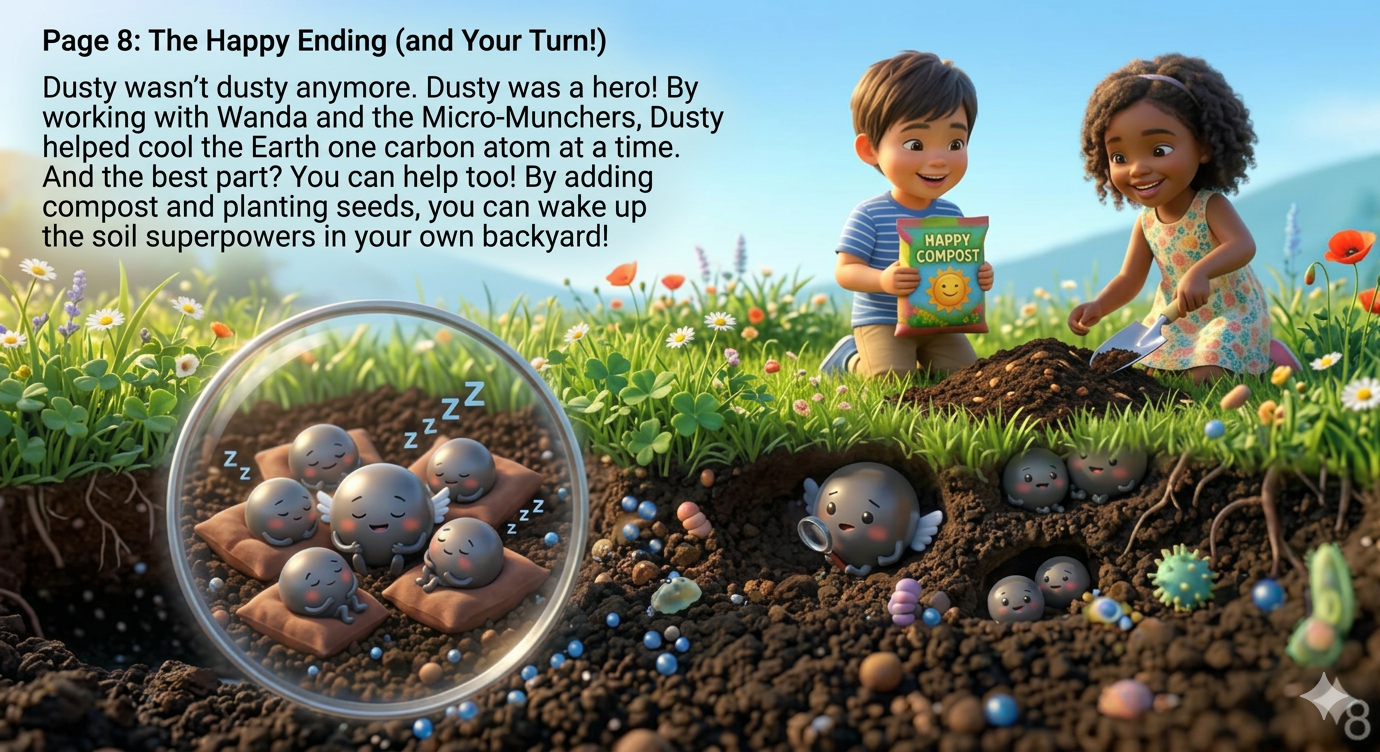
Dusty wasn’t dusty anymore. Dusty was a hero! With Wanda and the Micro‑Munchers, Dusty helped cool the Earth one carbon atom at a time and became healthy, living soil again. And guess what? You can help too. Add compost, plant seeds, and watch your own soil superpowers wake up right at home. Planting flowers for bees and butterflies helps the whole soil community grow.
Tips for Parents & Educators
This picture book offers a gentle, hopeful introduction to climate science for kids. Use these simple ideas to help young learners (ages 5–9) explore the story, ask questions, and feel empowered.
In the story, Dusty, Cee‑Cee, and Wanda each have a name and personality to help kids connect with them. But in the real world, a patch of dirt has no gender, a carbon atom has no gender, and worms can be male, female, or both! Nature is wonderfully surprising — and our characters help make those ideas easier to explore.
How to Use This Story:
-
Read Aloud: Pause on the illustrations. Ask, “What do you think is happening underground?” Kids often notice details adults miss.
-
Explore the Keywords: Tap the highlighted words to open pronunciation bubbles and simple definitions. These help build confidence with new science vocabulary.
-
Connect to Real Life: Look for soil, worms, roots, and fallen leaves in your yard or local park. Ask, “Where might the Micro‑Munchers be working right now?”
-
Empowerment: Focus on the ending. Kids love knowing they can help the Earth. Small actions—like planting seeds or adding compost—build lifelong habits.
Try This at Home!
Want to wake up your own “Dusty”? Build a tiny compost jar and watch the Micro‑Munchers turn old food into soil superfood. It only takes a few minutes and uses materials you already have at home.
Make Your Mini Compost JarLooking for more kid-friendly science resources? Explore our guides on Global Warming for Kids, Renewable Energy, Protecting Our Oceans, The Travels of Tiny Carbon, and Weather vs. Climate.